

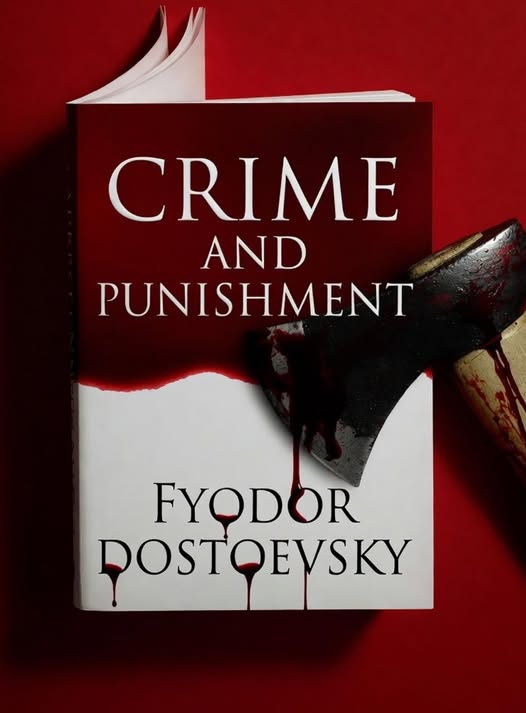
Crime and Punishment is one of Fyodor Dostoevsky’s most profound and psychologically intense novels, exploring the depths of human conscience, morality, and redemption. The story follows Rodion Raskolnikov, a young and impoverished former student living in St. Petersburg, who becomes consumed by the belief that extraordinary individuals have the right to commit crimes for a greater purpose. Driven by this dangerous philosophy, he murders an old pawnbroker, convincing himself that the act will benefit humanity.
However, instead of liberation, the crime plunges Raskolnikov into a psychological torment that slowly destroys his inner world. Haunted by guilt, paranoia, and moral conflict, he struggles between confessing the truth and maintaining his intellectual justification for the murder. Throughout the novel, Dostoevsky masterfully explores the human psyche—its contradictions, fears, and desires—revealing the consequences of separating intellect from compassion.
The narrative is enriched by a cast of vivid and complex characters, including Sonya, a humble and deeply moral young woman whose faith and kindness become the catalyst for Raskolnikov’s spiritual awakening. Through their interactions, the novel delves into themes of suffering, redemption, free will, and the possibility of moral rebirth even in the darkest of human experiences.
Set against the grim and chaotic backdrop of 19th-century St. Petersburg, Crime and Punishment is both a gripping psychological thriller and a profound philosophical exploration of what it means to be human. Dostoevsky crafts a narrative that remains timeless, challenging readers to confront the boundaries between right and wrong, justice and mercy, punishment and salvation.

