

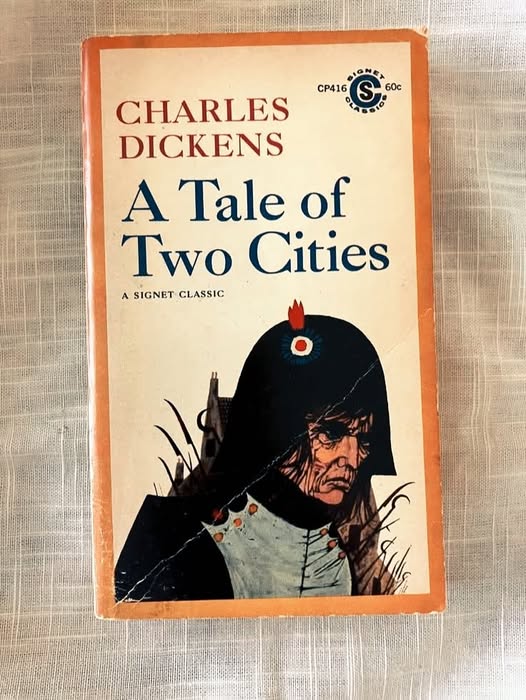
The tale shuttles between the glittering decadence of London and the gathering storm of Paris in the years leading up to the Revolution. We are introduced to a cast of unforgettable characters whose fates become inextricably linked: Dr. Manette, a French physician unjustly imprisoned for eighteen years in the Bastille, now mentally shattered and “recalled to life”; his devoted daughter, Lucie Manette, whose golden hair and unwavering love become a symbol of hope; and Charles Darnay, a virtuous French aristocrat who has renounced his cruel family name to make his own way in England.
But the story’s true soul is perhaps found in Sydney Carton, one of literature’s most brilliant and tragic figures. A brilliant but dissipated English lawyer, Carton is introduced as a man who sees no value in himself, declaring, “I am a disappointed drudge. I care for no man on earth, and no man on earth cares for me.” Yet, upon meeting Lucie Manette, he finds a reason to live, and ultimately, a reason to die.
As the Revolution erupts in France, the guillotine—”the sharp female newly-born”—becomes the grim symbol of a people’s long-suppressed rage unleashed. The novel does not flinch from depicting the brutality of the ancien régime nor the bloody terror that replaces it. When Charles Darnay travels to Paris to save a former servant, he is arrested by the revolutionaries, for the crimes of his ancestors are now his own. His fate is sealed by the vengeful Madame Defarge, a relentless revolutionary who knits the names of the condemned into her register, her own suffering having hardened her into an instrument of pure vengeance.
The novel builds to one of the most famous and breathtaking conclusions in all of English literature. It is here that Sydney Carton fulfills his destiny. In an act of ultimate self-sacrifice, he engineers a switch in the prison, taking Darnay’s place in the tumbrils that carry the condemned to the guillotine. His final thoughts, as he goes to his death, are a vision of a future he will never see—a future where his sacrifice ensures the happiness of the woman he loves and her family. He foresees a child named after him, and a Paris “beautiful and bright,” risen from the bloodshed.
“It is a far, far better thing that I do, than I have ever done,” he whispers, “it is a far, far better rest that I go to than I have ever known.” In this transcendent moment, the disappointed drudge achieves a glorious, tragic heroism. A Tale of Two Cities is, at its core, a thunderous argument for the power of personal redemption and the idea that even in the worst of times, an individual’s act of love can echo through history with the force of an earthquake.

