

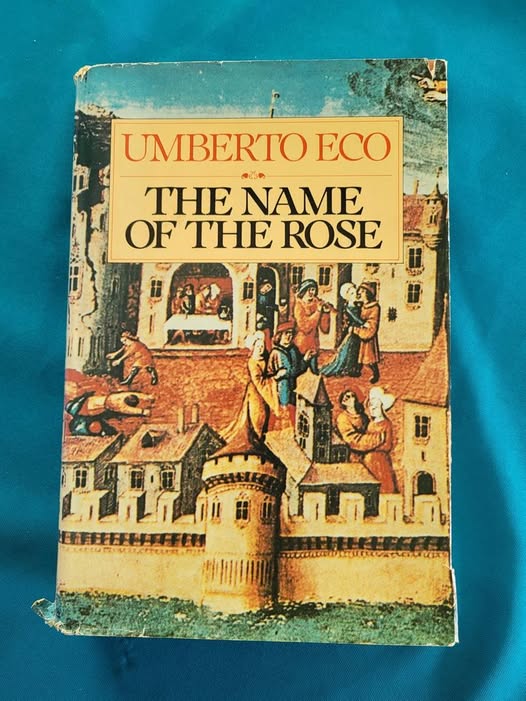
The Name of the Rose (1980) is one of Umberto Eco’s most celebrated works—a rich blend of historical fiction, detective mystery, theology, and semiotics. Set in a remote Benedictine monastery in Northern Italy during the year 1327, the novel explores the tension between faith and reason, the power of knowledge, and the dangers of fanaticism.
The story is narrated by Adso of Melk, a young novice who accompanies his mentor, the Franciscan friar William of Baskerville, to the abbey. What begins as a simple diplomatic visit quickly turns into a series of mysterious deaths. William, an advocate of rational inquiry inspired by Sherlock Holmes, uses logic, observation, and early scientific thinking to investigate the crimes. His methods contrast sharply with the superstition and fear that dominate the monastery’s atmosphere.
At the heart of the mystery is the abbey’s labyrinthine library—one of the most fascinating elements of the novel. The library symbolizes forbidden knowledge, intellectual control, and the church’s struggle to dictate what may or may not be read. The secret manuscript at the center of the plot, a lost work by Aristotle on comedy, raises profound questions about laughter, freedom of thought, and the political authority of religious institutions.
Eco combines historical accuracy with philosophical depth, creating a narrative that is both suspenseful and intellectually stimulating. The novel challenges readers to reflect on how societies manage truth, how power manipulates knowledge, and how ideas—especially dangerous or liberating ones—can shape the course of history.
The Name of the Rose remains influential not only as a gripping medieval detective story but also as a thoughtful exploration of human curiosity, moral conflict, and the enduring struggle between enlightenment and dogma.

