

We, the sons of the new age,
who left the old behind in its “holiness”,
raised our fists to fight
in battles yet to come,
and to emerge victorious…
We, the sons of the new age,
the shoots of a land watered with tears,
where the sweat of our brows was shed in vain –
for our land had become another’s bread,
and in madness we had to pay dearly for it.
We, the sons of the new age,
brothers born and raised in sorrow,
when our final hour rang out,
we were fortunate
to know how to say:
We refuse to lose
in the bloodstained game of human history,
no! no! we shall no longer accept defeat –
we demand victory!
victory, a free conscience and freedom of thought!
We refuse, for the sake
of old decaying things that demand “sanctity”,
to sink once more into the swamp of misery,
to mourn again the song of sorrow,
the monotonous, soulless song of slavery –
to become a thorn driven into the minds of humanity.
We, the sons of the new age,
with our youthful spirit and burning passion,
shall face new battles,
and for victory,
we are ready to make the ultimate sacrifice.
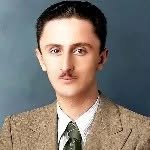
Migjeni was the pen name of Millosh Gjergj Nikolla (1911–1938), an Albanian poet and prose writer whose brief career helped transform 20th-century Albanian literature. His stark depictions of poverty, inequality, alienation, and frustrated youth broke sharply with the national-romantic tradition that had dominated much earlier Albanian writing. Migjeni – Hrvatska enciklopedija
Life and formation
Born in Shkodër, Migjeni studied in Tivar and at the Orthodox theological seminary in Manastir (modern Bitola), where his reading extended well beyond theology to Russian, Serbian, French, and other European literature. Rather than enter the priesthood, he became a teacher, working in Vrakë and Pukë; the poverty he encountered there became an important part of his literary world. Migjeni – Albanian Heritage
Writing and themes
Migjeni focused on people largely absent from idealized national literature: the poor, hungry, unemployed, marginalized, and disillusioned. His writing combined critical realism with irony and satire, treating deprivation not merely as personal tragedy but as a consequence of social conditions; he also challenged religious consolation, inherited myths, and the complacency of privileged society. Migjeni – Albanian Heritage
Major works
His defining poetry collection is Vargjet e lira (Free Verse), associated with 1936, while his prose is represented by works collected as Novelat e qytetit të veriut (Novellas of the Northern City). Notable individual pieces include Poema e mjerimit (“Poem of Misery”), Kanga e rinisë (“Song of Youth”), A don qymyr, zotni? (“Would You Like Some Coal, Sir?”), and Bukën tonë të përditshme falna sot (“Give Us This Day Our Daily Bread”). Migjeni – Hrvatska enciklopedija
Why he matters
Migjeni represented a decisive movement away from romanticized depictions of Albania toward modern social criticism. His compressed, sometimes abrasive language made misery, psychological conflict, and demands for social change legitimate subjects of Albanian poetry and prose; Albanian reference works consequently describe his writing as having a major innovative and reforming role in the country’s literary development. Migjeni – Albanian Heritage
A remarkably short career
Tuberculosis cut Migjeni’s career short. He traveled to Italy for treatment in late 1937 and died at Torre Pellice on August 26, 1938, only 26 years old; much of his reputation developed posthumously as his writings were collected and republished, including a complete edition prepared in 1957.

