

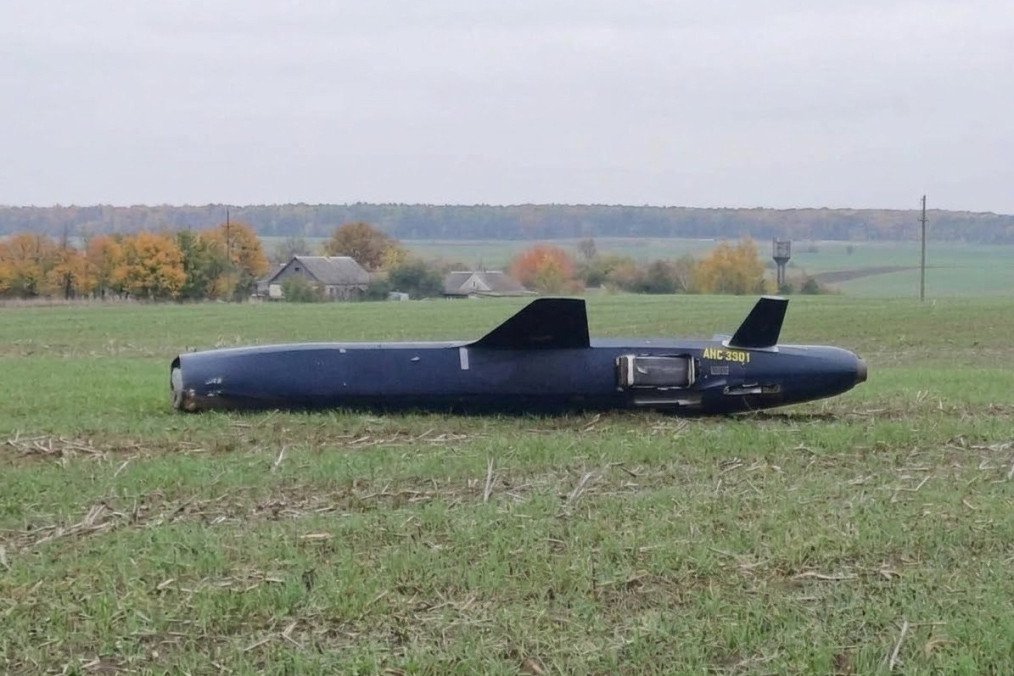
The Geran-5 K5-K has an operational range of 1,000 kilometres, but its flight speed could make it vulnerable to Ukrainian interceptor drones.
Russia has developed a new variant of the Geran-5 system, which can reach speeds of up to 1,000 kilometres per hour and strike targets at distances of up to 1,000 kilometres, according to information published by Ukrainian military intelligence.
The system, identified as the Geran-5 K5-K, carries a 90-kilogram warhead and uses optical guidance technology to navigate towards its target during the final stage of flight.
According to an analysis by Defense Express, published on November 11, its technical characteristics make the system more similar to a small cruise missile than to the traditional attack drones of the Geran family.
However, Ukrainian intelligence data reveals a significant difference between its normal cruising speed and its maximum speed.
According to Ukrainian intelligence, the Geran-5 K5-K normally flies at approximately 450 kilometres per hour, while during certain manoeuvres it can accelerate to speeds of up to 1,000 kilometres per hour.
Defense Express experts estimate that the maximum speed could be reached following a climb and a subsequent steep dive towards the target during the final stage of an attack.
If this assessment is confirmed, the window of opportunity to intercept the missile during its final flight phase would be extremely limited.
Nevertheless, its cruising speed of approximately 450 kilometres per hour during most of the flight could represent a significant weakness.
According to Defense Express, this could allow Ukrainian forces to deploy interceptor drones originally developed to neutralise jet-powered variants of Shahed drones.
Such a solution could prove more cost-effective than using more expensive air defence systems.
Previous open-source estimates put the cost of the basic Geran-5 version at no less than $200,000 per unit.
The K5-K variant also presents new challenges for Ukrainian air defences due to the integration of Russia’s Susanin optical guidance system.
This technology could reduce the weapon’s reliance on satellite navigation during the final stage of flight, potentially making it more resistant to electronic interference.

